
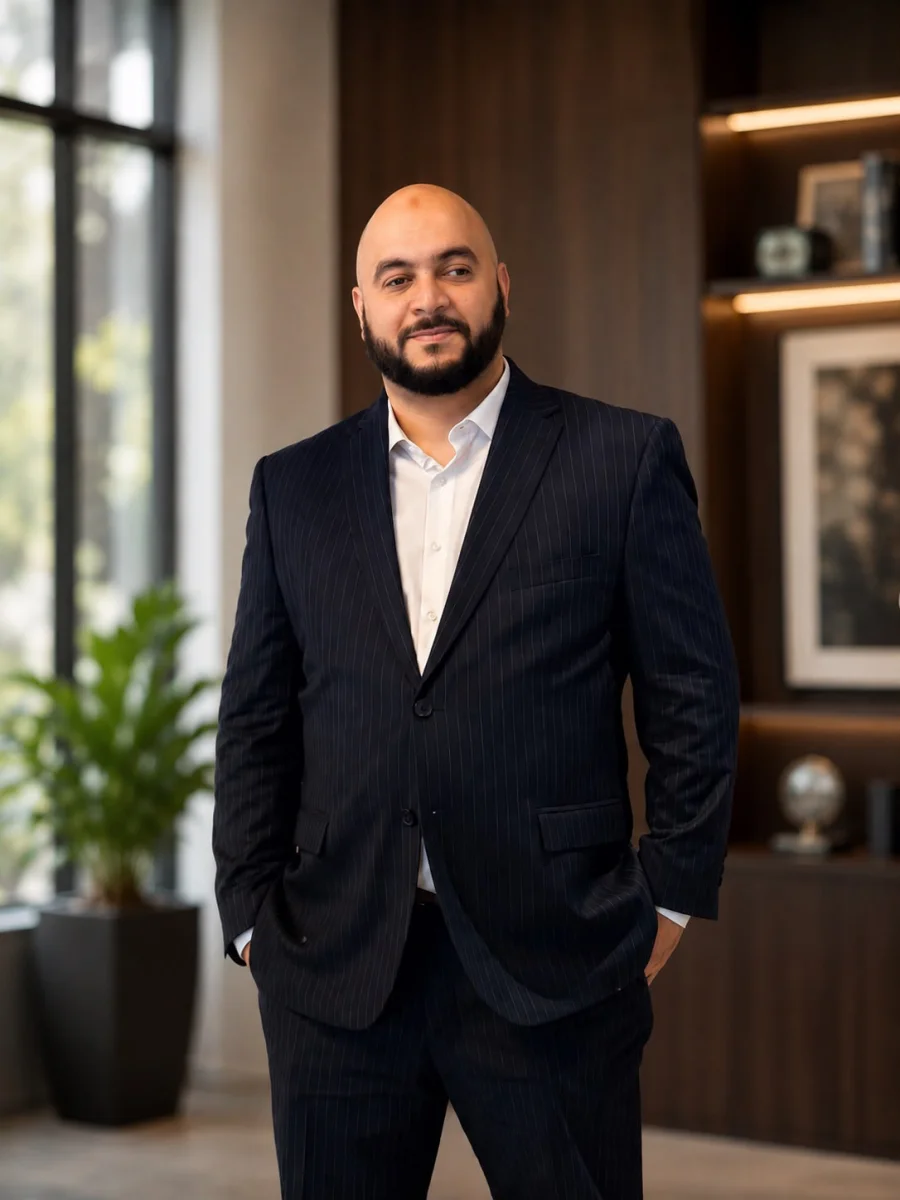
Engineer, consultant, product thinker, and author
I work at the intersection of technology, business, and human behavior — as an engineer, digital consultant, product thinker, and author.
My career began in software engineering. I spent years designing and building digital products, backend systems, web applications, APIs, cloud infrastructure, and business platforms. Working across different technologies, organizations, and projects gave me a practical understanding of what happens when technology meets the complexity of real businesses.
The shift
Over time, my perspective evolved beyond writing code.
I became increasingly interested in the larger questions behind technology: Why are we building this? What problem are we actually trying to solve? Can the process be simpler? What should be automated? Where does technology create value, and where does it simply add another layer of complexity?
These were not abstract questions. They were the ones that kept pulling my work past the codebase — toward product, process, and the systems people actually live inside.
From engineering to a wider lens
Engineering taught me to think in systems.
Software engineering, in particular, encourages a certain way of looking at the world: break a problem down, identify dependencies, understand constraints, design a solution, measure the result, and continuously improve it.
That mindset is extremely powerful.
But experience also taught me its limits.
Businesses are not pieces of software. People are not APIs. Markets do not behave like deterministic algorithms. And organizations rarely operate exactly as they appear on an architecture diagram.
This realization has shaped both my consulting work and my writing. If you want to see how that shows up in practice, consulting is where I work through it with organizations.
Building things
Throughout my career, I have remained deeply involved in technology and product development.
My engineering background includes backend development, software architecture, databases, APIs, cloud infrastructure, distributed systems, automation, and modern web technologies. I have worked with technologies including PHP, Laravel, Symfony, JavaScript and TypeScript ecosystems, Python, Go, relational and NoSQL databases, cloud services, containers, and infrastructure automation.
But technology is only one part of the work.
The more important skill is understanding how the pieces fit together. A successful digital product requires more than good code. It requires a clear problem, a useful experience, sustainable architecture, appropriate processes, and an understanding of the people who will ultimately use it.
That is why I increasingly approach projects from both sides: the engineer who understands how to build the system and the consultant who asks whether the system should exist in the first place.
For technical writing and engineering-focused articles, visit engineering.
Writing about the things we build — and the lives we live
My interest in systems thinking extends beyond technology.
My first book, Life Is Not Linear: The Myth of Falling Behind and the Reality of Becoming, examines what happens when we try to apply structured, rational thinking to something that refuses to behave rationally: life itself.
We are surrounded by timelines. Graduate by a certain age. Start a career. Get promoted. Buy a house. Build a family. Become successful. Have everything figured out.
When life follows a different sequence, we often interpret the deviation as failure. But life does not operate on a predictable roadmap. Careers change direction. Plans fail. Opportunities arrive unexpectedly. Relationships evolve. Ambitions change. People start over. Some of the most important developments in a person's life cannot be measured while they are happening.
In Life Is Not Linear, I explore these ideas through the lens of someone trained to think systematically — someone accustomed to inputs, outputs, optimization, feedback loops, and measurable progress.
The book is ultimately an argument for a different kind of rigor: one that accepts uncertainty instead of pretending it does not exist. It is about progress without a straight line. And becoming without a predetermined destination.
Read Life Is Not Linear or browse all books.
Beyond the job title
I do not see engineering, consulting, product development, and writing as separate identities. They are different ways of exploring the same underlying questions.
How do things work? Why do they work this way? What could be improved?
What happens when a system becomes more complicated than the problem it was created to solve?
And perhaps most importantly: How can we build better systems without forgetting the humans who have to live with them?
That question sits at the center of my work. Whether I am designing software, advising a business, exploring AI and automation, or writing about the uncertainty of personal growth, my goal is the same: to make complexity easier to understand and to turn that understanding into something practical.
I write, build, and advise from Marrakech, Morocco, while working with people and organizations beyond borders.
Let's talk about the actual problem.
I help organizations find clarity in complex digital systems — then decide what to build, automate, or leave alone.
Talk about your project